
Finding Haltom City Residents
Haltom City has no official master list of everyone who lives there. The useful resident trail changes with the question. For a current parcel, Tarrant Appraisal District can tie an owner name to a property record. For a change in ownership, the County Clerk’s recorded-instrument index can show parties to a deed or lien. A current precinct question belongs with elections tools, while an older household question may require a directory, census, school census, or archive record. Each source has a different date and purpose.
Start with a fact that can be checked without guessing, such as a street address, parcel account, document number, directory year, or court cause number. A property owner is not automatically the occupant, and a mailing address is not automatically the parcel address. A name hit also needs a second, independent source before it is treated as a likely match. Keep the custodian, record date, and the field that supplied each fact with the result.
- Search the current appraisal record by owner name or property address, then save the account number and legal description.
- Use the map viewer to check the parcel, city boundary, ZIP area, roads, and voting precinct.
- Search the County Clerk index with the owner name, grantor or grantee role, document type, subdivision, or instrument number.
- For a dated household lead, ask the library, Fort Worth History Center, or Tarrant County Archives for the relevant directory, census, or map collection.
- When an item is not online, make a narrow request to the custodian using the date, address, record type, and known identifier.
Note: A blank public result can reflect spelling, date, coverage, privacy, or indexing limits rather than proof that no record exists.
Haltom City Records Offices
Haltom City sits wholly in Tarrant County, so municipal, county, and state custodians each hold part of a residents directory trail. The County Clerk keeps real-property instruments and several county filing families. Tarrant Appraisal District maintains the current appraisal roll. Tarrant County Elections provides local registration and precinct routes, while the Texas Secretary of State supplies the statewide voter lookup. The City Secretary is the municipal records hub for city archives, requests, ordinances, minutes, and elections administration.
Tarrant County Clerk
100 W Weatherford Ave
Fort Worth, TX
817-884-1195
Real-property and county filing custodian
Tarrant Appraisal District
Current parcel and owner records
Tarrant County, TX
Property search
Current appraisal-record custodian
Tarrant County Elections
2700 Premier St
Fort Worth, TX
817-831-8683
Registration and precinct custodian
Office roles matter. The County Clerk can provide an instrument or copy procedure but does not perform a title search. An appraisal record may show a current owner and mailing field but does not create an occupancy list. The city archive can link an address to a municipal document, not to every person connected with that address.
Haltom City Parcel Search
The TAD property search is the strongest starting point when a current address or likely owner is known. Its category selector includes account number, owner name, owner address, property address, property city, legal description, subdivision name, geo reference, neighborhood code, and other record-specific modes. The result can return an account number, geo reference, property address and city, primary owner name, and market value. Use the exact address or name first, then try a careful spelling or suffix variant.
| Search control | Use in a Haltom City lookup | Important limit |
|---|---|---|
| Owner Name or Owner Address | Find appraisal cards connected to the query | An owner or notice address does not prove occupancy |
| Property Address or Property City | Locate a parcel by its physical property field | Confirm the city field and parcel separately |
| Account Number or Geo Reference | Carry a precise identifier to later records | Use the field exactly as displayed |
| Legal Description or Subdivision | Bridge the appraisal card to plats and deeds | Street numbers can change while land descriptions remain useful |
Property address is the parcel’s physical location. Primary owner address is where appraisal notices go. Legal description identifies land through a subdivision, lot, block, or other land description. Label those fields separately in any research notes. TAD also warns that certain age-65 exemption information is withheld from unauthorized viewers under Texas Tax Code §25.027.
Haltom City Deed Records
Recorded real-property documents add dates and parties to a property trail. The County Clerk’s current portal offers quick and advanced search, a Real Property department choice, date ranges, index-only or index-and-full-text choices, and grantor, grantee, subdivision, document-type, and document-number searches. A grantor conveys an interest; a grantee receives it. Those roles should be recorded as displayed, since a deed of trust, release, easement, lien, or plat is not the same as a transfer of ownership.
The captured Tarrant County Clerk real-property search shows the official entry point for the deed and instrument index.
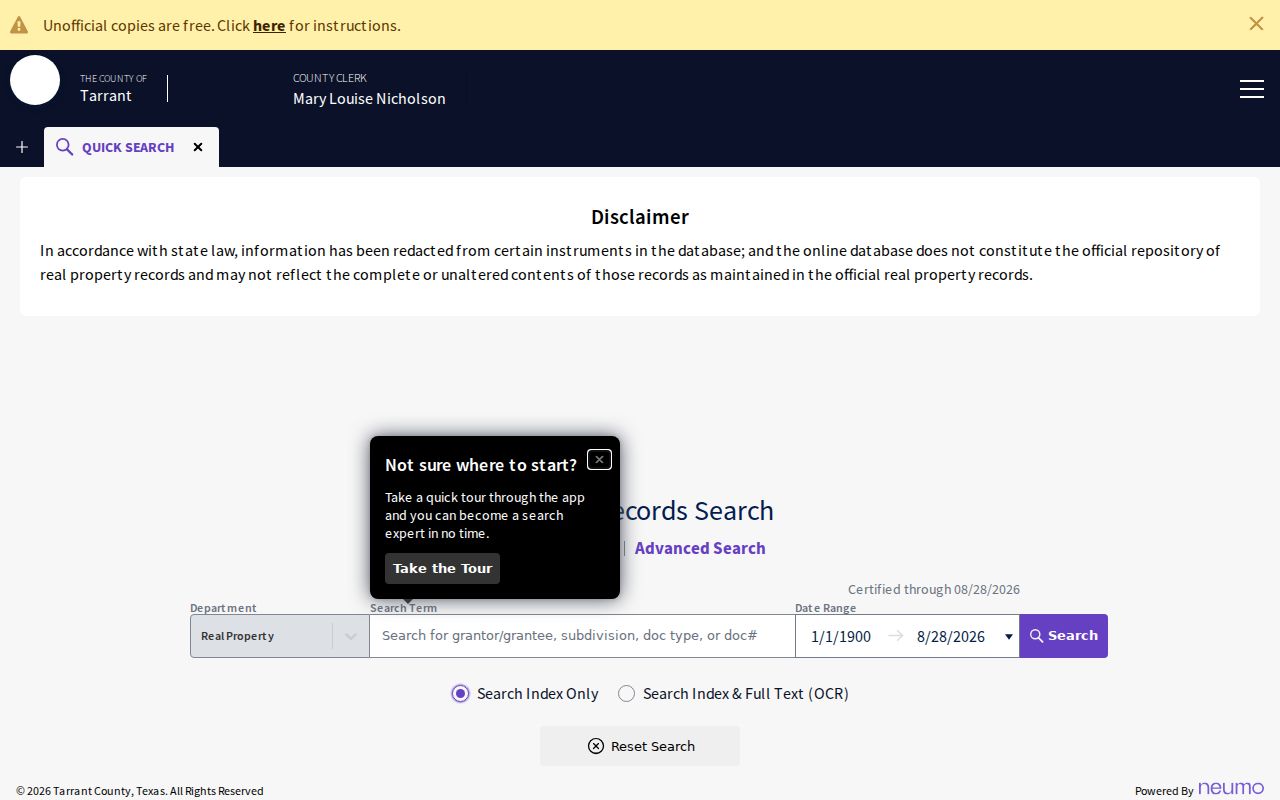
Use the portal result to obtain the document number, recording date, type, grantor, grantee, and legal-description clues, then review the actual instrument or request a copy. Online back-year coverage is not stated. When the web trail stops, Tarrant deed-history cards cover 1876–1984 and archive resources document older index material, so the next step is a custodian or archive inquiry rather than an assumed gap.
Haltom City GIS Context
A parcel becomes easier to interpret when its map layers are viewed together. The Tarrant GIS Public Map Viewer can search by address, account, or owner. Its available layers include TAD parcels, city boundaries, ZIP codes, voting precincts, roads, schools and school districts, facilities, flood contours, and other reference layers. This is useful for checking whether a postal label, precinct, school district, or nearby road belongs to the same geography as a property record.
The captured Tarrant GIS Public Map Viewer illustrates the county’s parcel and contextual-layer workspace.
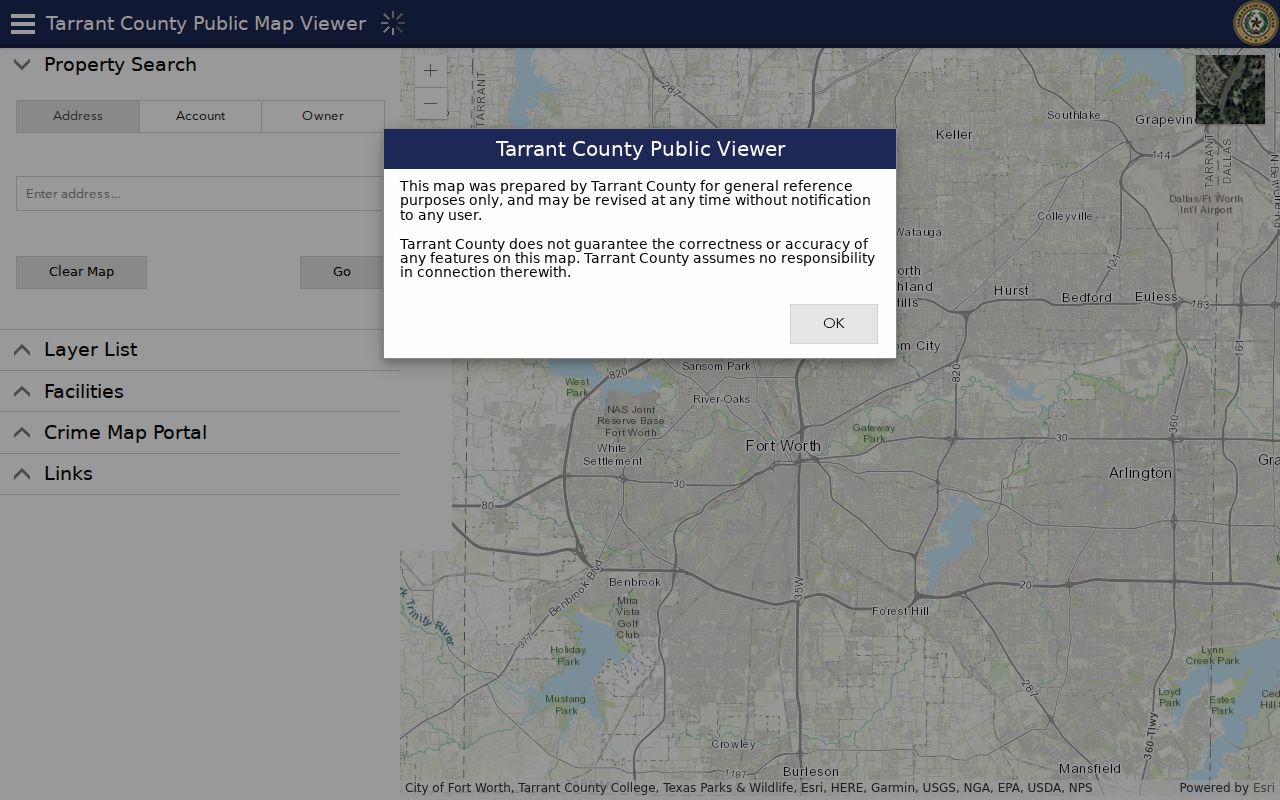
A map layer is context, not a promise that every boundary has the same legal purpose. Compare the property card’s field labels with the map result. For an older address, road aliases and a subdivision or legal description can be stronger anchors than a modern postal-city label.
Note: A ZIP, city boundary, voting precinct, and school district describe different geographies and should not be treated as interchangeable.
Haltom City Voter Lookup
For current registration or precinct information, use the Texas My Voter Portal with a name, county, date of birth, and ZIP, selecting Tarrant County for Haltom City. County tools add address and precinct routes. Tarrant County also announced a Voter Precinct Change Lookup for address changes effective January 1, 2026, and its Ballot Verifier includes ballot images and cast-vote records beginning in March 2024. Those tools are date-specific election resources, not historical household directories.
The captured Texas My Voter Portal is the state lookup destination for an individual voter query.
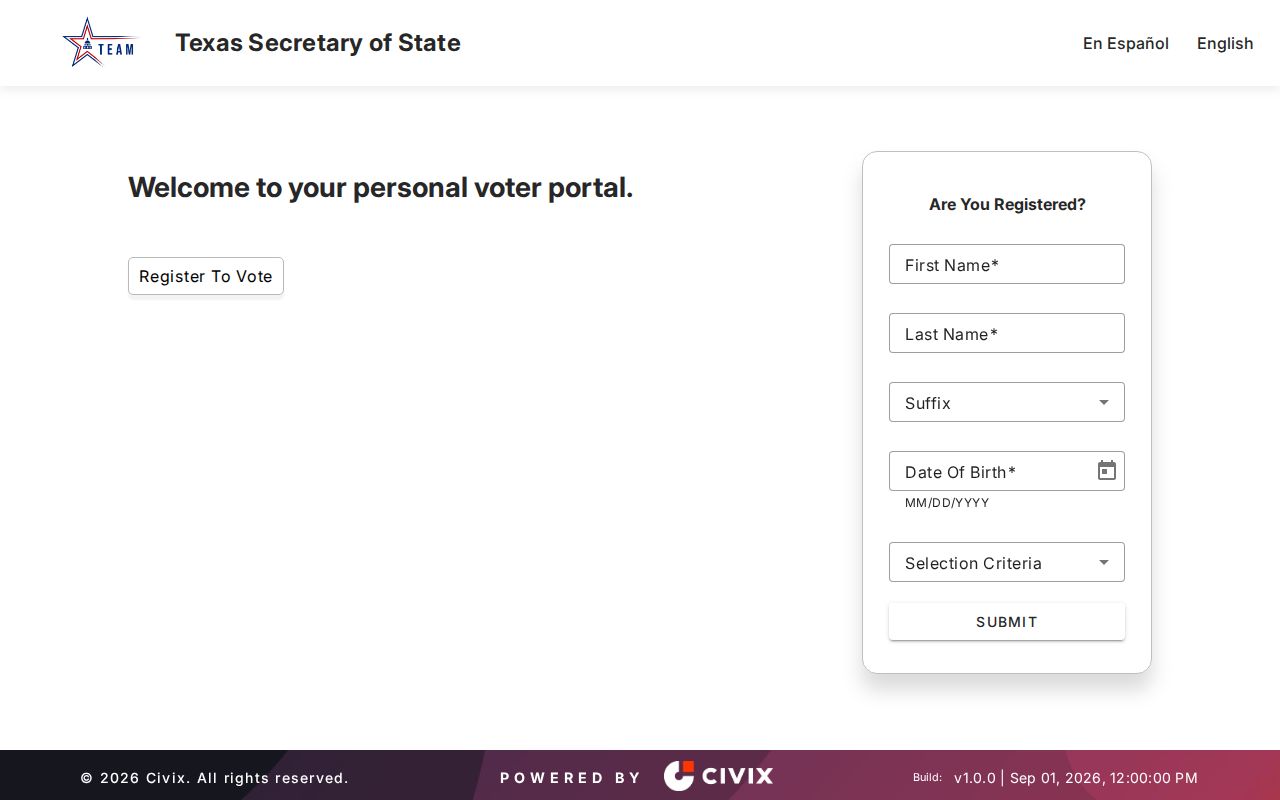
Texas Election Code §13.004 restricts voter SSNs, Texas driver-license or DPS-ID numbers, and telephone numbers. Protected-address programs may also suppress an ordinary result. Report a missing result as not found in that public tool, not as proof of nonregistration or nonresidence. For a larger statutory list request, use the Secretary of State’s current forms and observe the required affidavit and use limits.
Haltom City Court Routes
Court searching depends on the court that created the file. Haltom City Municipal Court handles municipal citations. Tarrant County’s District Clerk holds civil, family, and felony court material, while county courts and justice courts have their own records. Odyssey Public Access is the current county destination, but its interface can redirect through a JavaScript or login layer. Texas re:SearchTX is a statewide discovery route, not a substitute for the relevant clerk’s file.
The captured Odyssey Public Access screen documents the current county public-access destination.
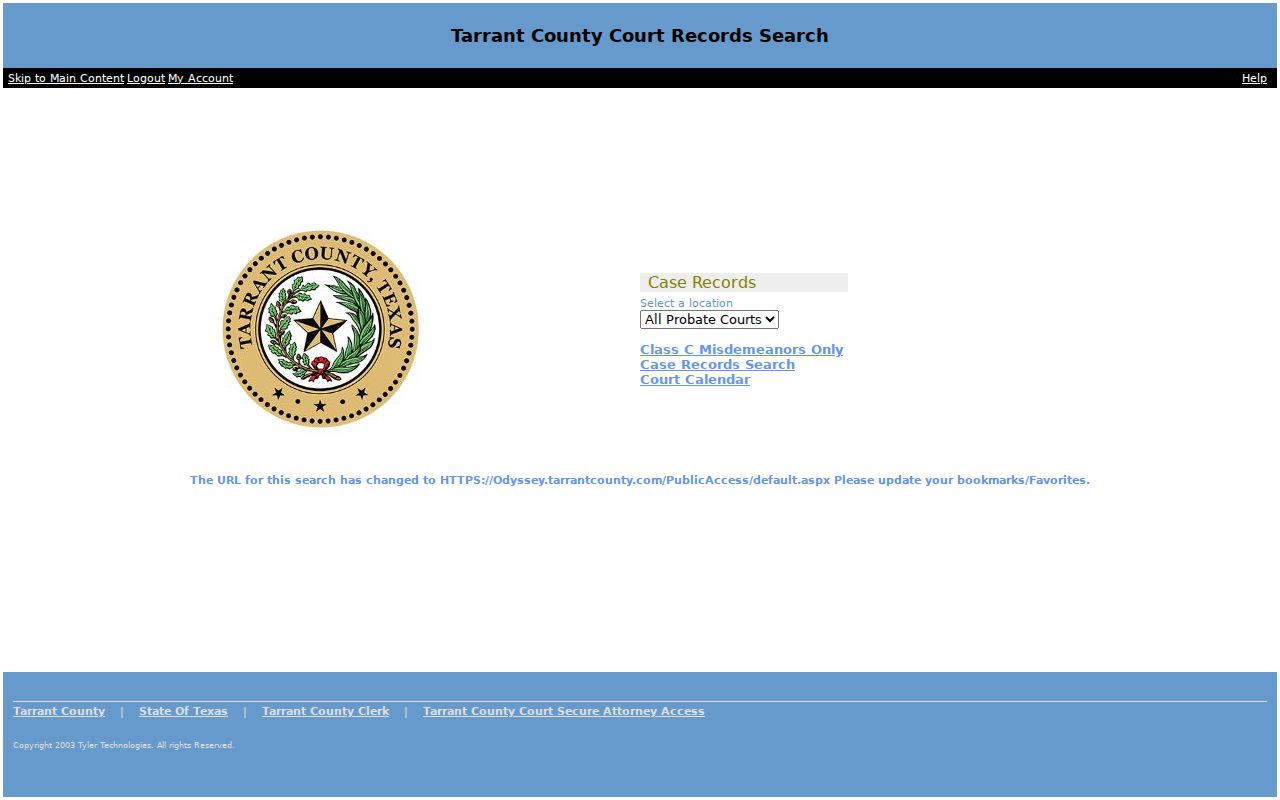
Check the live portal before relying on a field or result format, then record the court, cause number, party role, event date, and disposition as shown. A citation, court-party result, or docket event does not establish a current Haltom City address.
Haltom City Vital Records
Vital records can supply an event lead, but they do not work like an open residents directory. The Tarrant County Clerk is the local registrar for marriage licenses and vital registration. Texas DSHS handles statewide certified copies, verifications, indexes, and application forms. Under Texas Government Code §552.115, birth records become public on the 75th anniversary and death records on the 25th anniversary, subject to statutory exceptions. Recent certified records have qualified-requester rules.
The Texas DSHS vital applications and forms page is the current entry point for record type, identity, relationship, purpose, shipping, and application requirements.
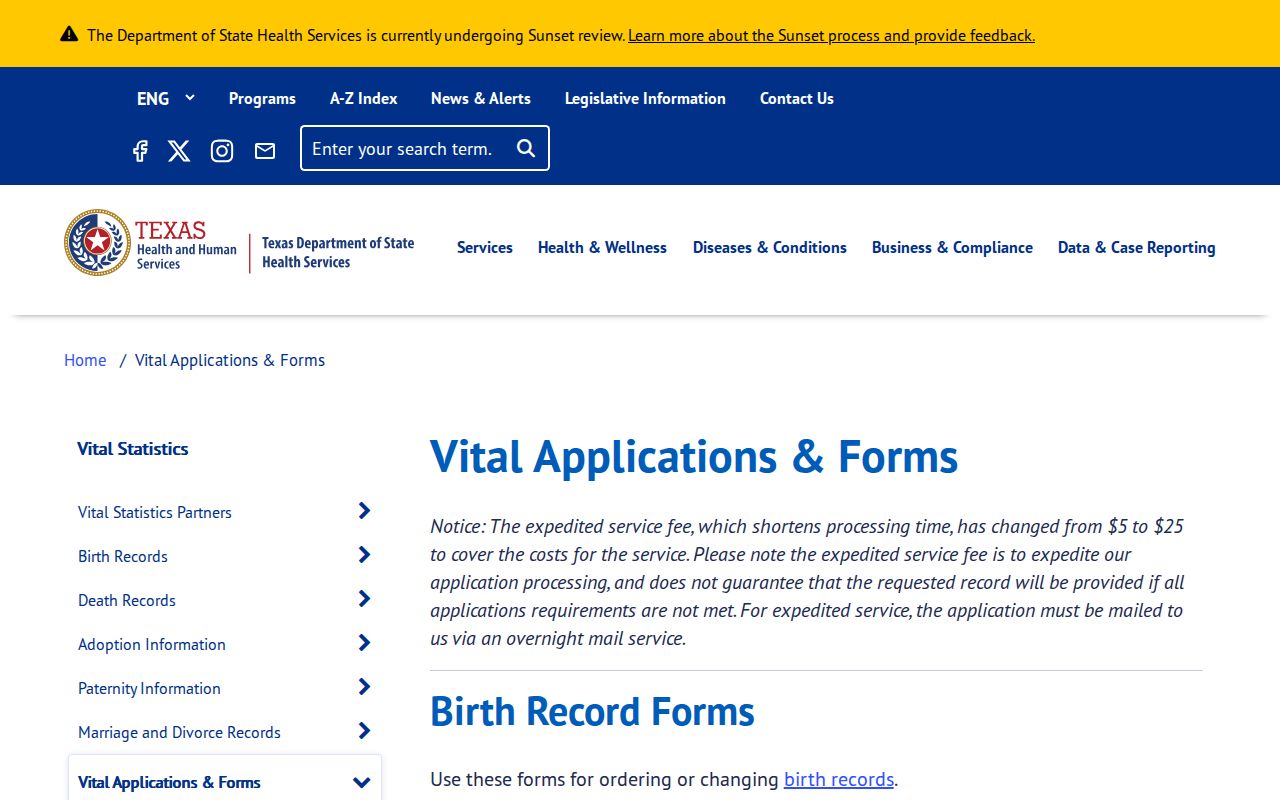
Birth indexes are available digitally from 1925 and death indexes digitally from 1965, with earlier microfiche from 1903 noted by DSHS. Marriage verifications generally begin in 1966 and divorce verifications in 1968. An index is a lead, not a certified copy, and the county clerk or district clerk may be the appropriate custodian for an underlying marriage license or divorce decree.
Note: Ask the custodian for the least sensitive record product that answers the question, and expect eligibility review or redaction where the law requires it.
Haltom City Current Directories
Current sources do not list the same population. The appraisal roll is most useful for a current property owner. A recorded-instrument index identifies people in a filing role. Voter tools can return a current registration or precinct result when public. The city staff directory identifies public-facing municipal contacts, and the city archive identifies documents tied to municipal activity. Read each result for the fact it actually supports.
| Current source | What it can show | Custodian | Access boundary |
|---|---|---|---|
| TAD property record | Owner, parcel, mailing and property fields | Tarrant Appraisal District | Owner is not necessarily occupant |
| Official-records index | Parties to deeds and related instruments | Tarrant County Clerk | Role and document type control meaning |
| Voter and precinct tools | Individual registration or geography result | Texas and Tarrant elections offices | Protected fields and addresses are limited |
| City staff directory | Public office contacts | Haltom City | Not a general population roll |
| City archive | Published city documents and address-linked reports | Haltom City | Document context and redactions matter |
A commercial compilation may merge old addresses, marketing data, and public filings under a similar name. An official source is narrower, dated, and tied to a custodian. Use official records for the underlying fact, then compare two independent sources when identity matters. A business filing, license, or property mailing field is not a stand-in for a personal residence.
Haltom City Archive Search
The municipal archive is a useful discovery layer for city-created records. Its controls include keywords, archive category, time period, date-range start, date-range end, and search. Categories include annual budgets, annual comprehensive financial reports, monthly certificates of occupancy, building permits, code-violation reports, police press releases, and TCEQ MS4 reports. An address plus a narrow date or document category is a safer starting key than a broad name search.
The captured Haltom City archive search shows the city’s searchable-document entry point.
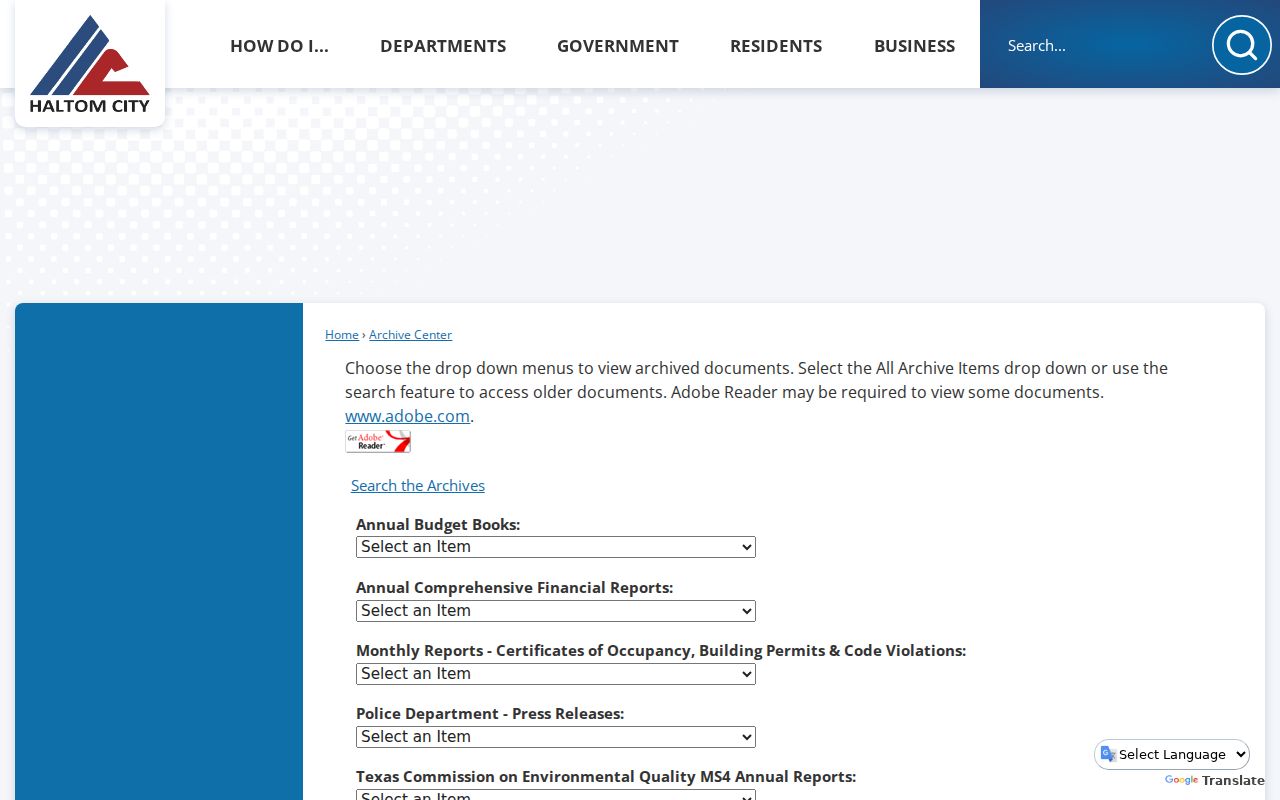
On July 16, 2026, the city announced that 1,465 public documents had been made accessible and searchable, including agendas, minutes, budgets, plans, reports, and applications. The search layer helps locate material, but the dated underlying document remains the record to cite. A code report can show an address, date started, zoning district, and category without identifying an occupant or establishing fault.
Haltom City Filing Checks
A state business record can be a useful identity lead when it is read for its own purpose. Texas SOSDirect provides an account-based route for entity filings, assumed names, UCC records, registered agents, and copy orders. The Secretary of State says searches cost $1, while filing-series coverage and available fields vary. Capture the entity name, filing type, filing date, role, and address field exactly as shown.
The captured Texas SOSDirect page is the official entry point for those state filing searches.

A registered agent, officer, organizer, or filing address is a business-record role. It does not establish that the person lives in Haltom City. Compare it with a dated county or municipal source only when the underlying question calls for that narrower fact.
Haltom City History Names
Older Haltom City resident research needs place-name flexibility. The early county seat was Birdville, near today’s Haltom area, and records were later moved to Fort Worth. Haltom Village was founded in 1932, followed by consolidation with Oak Knoll in 1950 and annexations in 1955. A directory, map, deed, or county index may therefore use Birdville, Haltom Village, Oak Knoll, Fort Worth, a rural route, or a land description instead of a current Haltom City label.
The March 29, 1876 courthouse fire damaged or destroyed early loose-paper records. That does not make every early result impossible. Tarrant County Archives identifies substitutes such as later deed filings, commissioners-court volumes, direct and reverse indexes, maps, and later certified copies. For a pre-1900 question, note the date and series searched, then treat an absence as a documented records limit when it fits the source.
Haltom City Past Directories
Haltom-specific directory research is regional rather than a single local shelf. The Haltom Public Library does not publish a year-by-year Haltom City directory run, reverse-directory run, or obituary index. Those specific holdings are not located in official sources. The dependable route moves through the library’s research links, Tarrant County Archives, the Fort Worth History Center, and selected digitized regional material.
Tarrant County Archives lists historic maps, city directories, school census from 1919–1970, early probate abstracts from 1866–1959, title abstracts, and cemetery records. Fort Worth Public Library describes a genealogy and local-history collection with more than 40,000 volumes, 9,500 microfilm rolls primarily containing census and city directories, and 180,000 microfiche. A dated directory entry is evidence of an address association at publication, not conclusive proof of legal residence.
For a fuller collection-by-collection path, use the Haltom City city directories. Match a directory year to a deed, census, school census, map, newspaper, or probate record before making a historical identification.
Haltom City Library Trails
The Haltom City Public Library genealogy and history resources connect local researchers with HeritageQuest, FamilySearch, NARA, Tarrant vital records, Texas State Library and Archives Commission resources, UNT’s Portal to Texas History, Texas Digital Sanborn Maps, Texas Reference Center, Find a Grave, and genealogy societies. HeritageQuest supplies federal census and local-history material through a current library route. The library can help with reference research, while certified copies remain with their government custodians.
The Tarrant County Archives is the next county-level stop for maps, historical ledgers, directories, probate abstracts, and school-census material. Its public hours are Tuesday through Friday, 9–4:30, with Monday by appointment. The Fort Worth History Center is the deeper regional source for books, newspapers, maps, yearbooks, and microfilm; it asks visitors to make appointments and requests three business days’ notice for offsite material.
Note: A directory, obituary, cemetery memorial, or map is a dated research lead, so preserve the title, year, page, and repository with the item.
Haltom City Privacy Limits
Public access has firm boundaries. Texas Public Information Act requests are governed by Texas Government Code chapter 552, but record-specific privacy law still controls. Voter files restrict SSNs, Texas driver-license or DPS-ID numbers, and telephone numbers. Vital records have anniversary and qualified-requester limits. Court records can be sealed, juvenile, expunged, or otherwise restricted. A public police record may also contain redactions. Request the document, date, or parcel that answers the question instead of asking a custodian for a broad name file.
The Texas Address Confidentiality Program gives eligible survivors of family violence, sexual assault, trafficking, stalking, or child abduction a substitute mailing address and forwarding service. A protected person may therefore be absent from an ordinary public lookup. That result is a lawful privacy outcome, not a reason to probe further or publish sensitive fields.
Haltom City Fraud Alerts
Tarrant County’s Property Fraud Alert is a practical monitoring tool for a name already connected with recorded property. The free service watches an exact supplied name as a grantor or grantee across more than 90 document types and sends an email or telephone alert. It is useful for learning that a new recorded instrument may need review, but it does not prevent fraud, certify a filing, or establish the identity of a party with a similar name.
The captured Tarrant County Property Fraud Alert page shows the county’s official enrollment route.
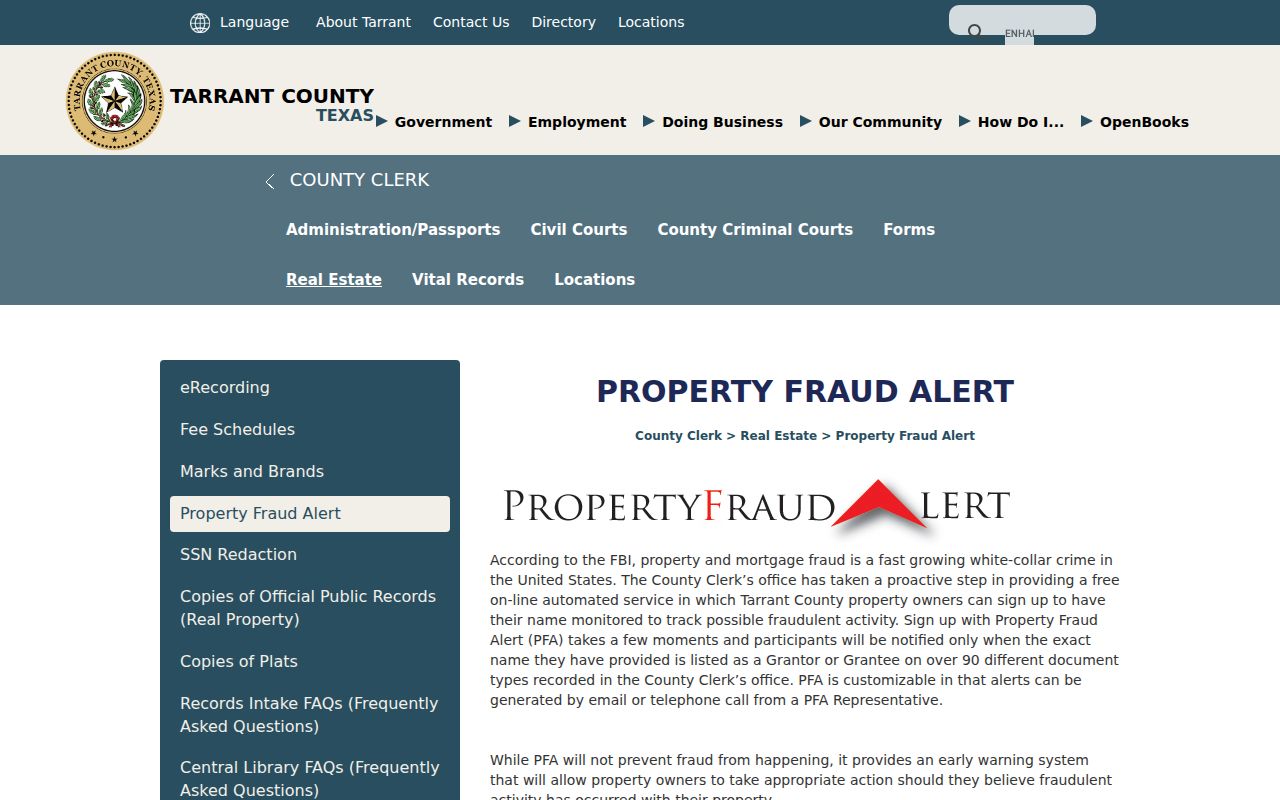
When an alert arrives, compare the document number, type, date, parties, and legal description in the County Clerk record, then obtain the instrument through the official copy route. Do not respond to a payment demand or use an unofficial copy service without first checking the County Clerk’s current instructions.